
Paying in the USA feels familiar until it does not. Australians often assume cards, limits, and deposits work the same way as at home. In 2026, small differences still cause big problems. Hotel security holds, fuel station pre authorisations, tipping screens, and card declines can temporarily lock up large amounts of money. This guide explains the most common payment mistakes Australians make in the USA and how to avoid them.
Hotel holds catch Australians off guard
US hotels almost always place a temporary hold on your card at check in. This is not a charge. It is a security deposit.
Typical holds range from 100 to 300 US dollars per stay. Higher end hotels and resorts may hold more.
Problems occur when:
You use a debit card instead of a credit card.
Your daily limit is low.
You move between hotels every few nights.
Australian banks often take longer to release holds than US banks. Your available balance can stay reduced for days after checkout.
What to do:
Use a credit card if possible.
Keep extra buffer funds.
Ask the hotel the hold amount and release timing.
Fuel station pre authorisations are larger than expected
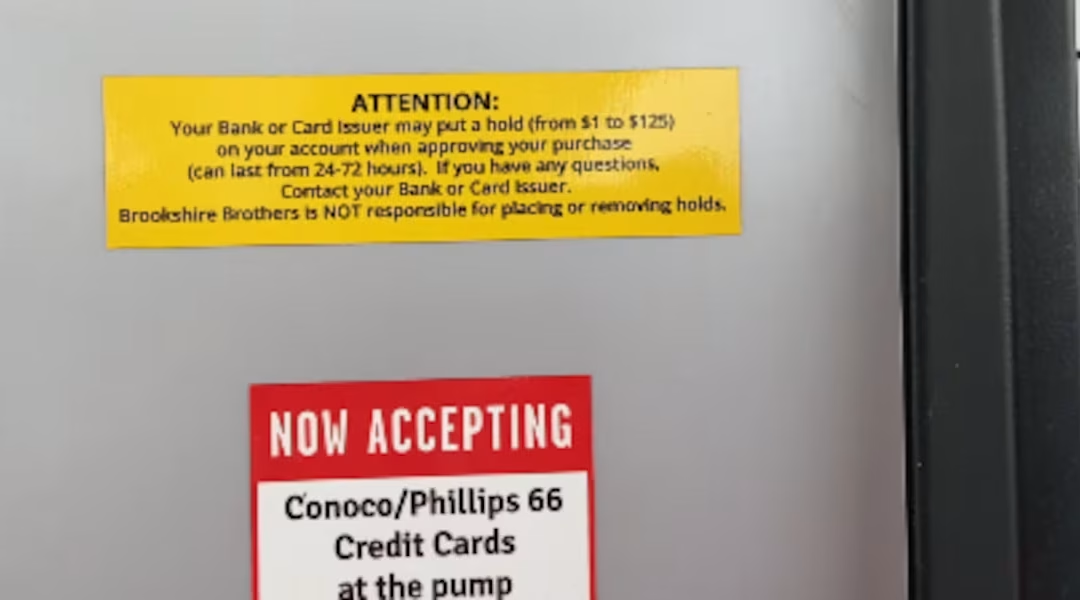
Paying at the pump in the USA usually triggers a large pre authorisation.
Common amounts are 100 to 200 US dollars, even if you only buy 40 dollars of fuel.
Australians often think they were overcharged. They were not. The extra amount is released later.
This becomes a problem when:
You refuel multiple times in a short period.
You use a debit card.
You are close to your card limit.
To reduce issues:
Pay inside the station instead of at the pump.
Use a credit card.
Track available balance, not posted transactions.
Debit cards cause more problems than credit cards
Debit cards work in the USA but they are riskier for travellers.
Common debit card issues:
Funds locked by holds and pre authorisations.
Slower release times.
Higher risk if the card is compromised.
Credit cards handle temporary holds better and offer stronger fraud protection. If you must use a debit card, increase limits and keep extra cash available.
Contactless payments fail more often than Australians expect
Tap and go is common in the USA, but limits and rules vary by terminal.
You may encounter:
PIN requests for higher amounts.
Random declines on foreign cards.
Machines that only accept insert or swipe.
If staff retry the transaction several times, multiple pending charges can appear.
Best practice:
Carry at least two cards.
Know your card PIN.
Check your banking app for duplicate attempts.
Tipping screens inflate totals quickly
Digital tipping screens are everywhere. Cafes, bars, taxis, and even counter service terminals prompt tips.
Suggested options often start at 20 percent or more. Many Australians tap without checking.
This leads to:
Over tipping on low service transactions.
Daily spending creeping higher than planned.
You can always choose a custom tip or skip tipping where it is not expected.
Foreign transaction fees quietly drain your budget
Many Australian cards still charge foreign transaction fees of 2 to 3 percent.
These fees apply to:
Hotels.
Food and drinks.
Rideshares.
Attractions.
On a multi week trip, this can add hundreds of dollars. Check your card fees before you travel.
Cash still matters in the USA
The USA is card focused but cash is still useful.
Cash is often needed for:
Small tips.
Valet parking.
Hotel housekeeping.
Rural areas.
Carry small bills. Do not rely entirely on cards.
Why payment problems are worse without mobile data
When payments go wrong, you need instant access.
You may need to:
Approve a bank alert.
Check pending transactions.
Contact your bank.
Track hotel holds and fuel releases.
Airport and hotel WiFi is unreliable. Australian roaming plans often throttle speeds or cost more than expected. Many Australians avoid payment stress by using a USA SIM or eSIM that works the moment they land. A reliable option is a USA SIM or eSIM for Australians travelling in 2026, which gives immediate data access for banking apps, alerts, and support when payment issues arise.
What Australians should do before travelling
Prepare before departure:
Notify your bank of travel dates.
Increase daily card limits.
Carry more than one card.
Understand pre authorisations.
Budget for temporary holds.
Most payment issues in the USA are predictable. Preparation prevents them.